
Snapshots & Inspection
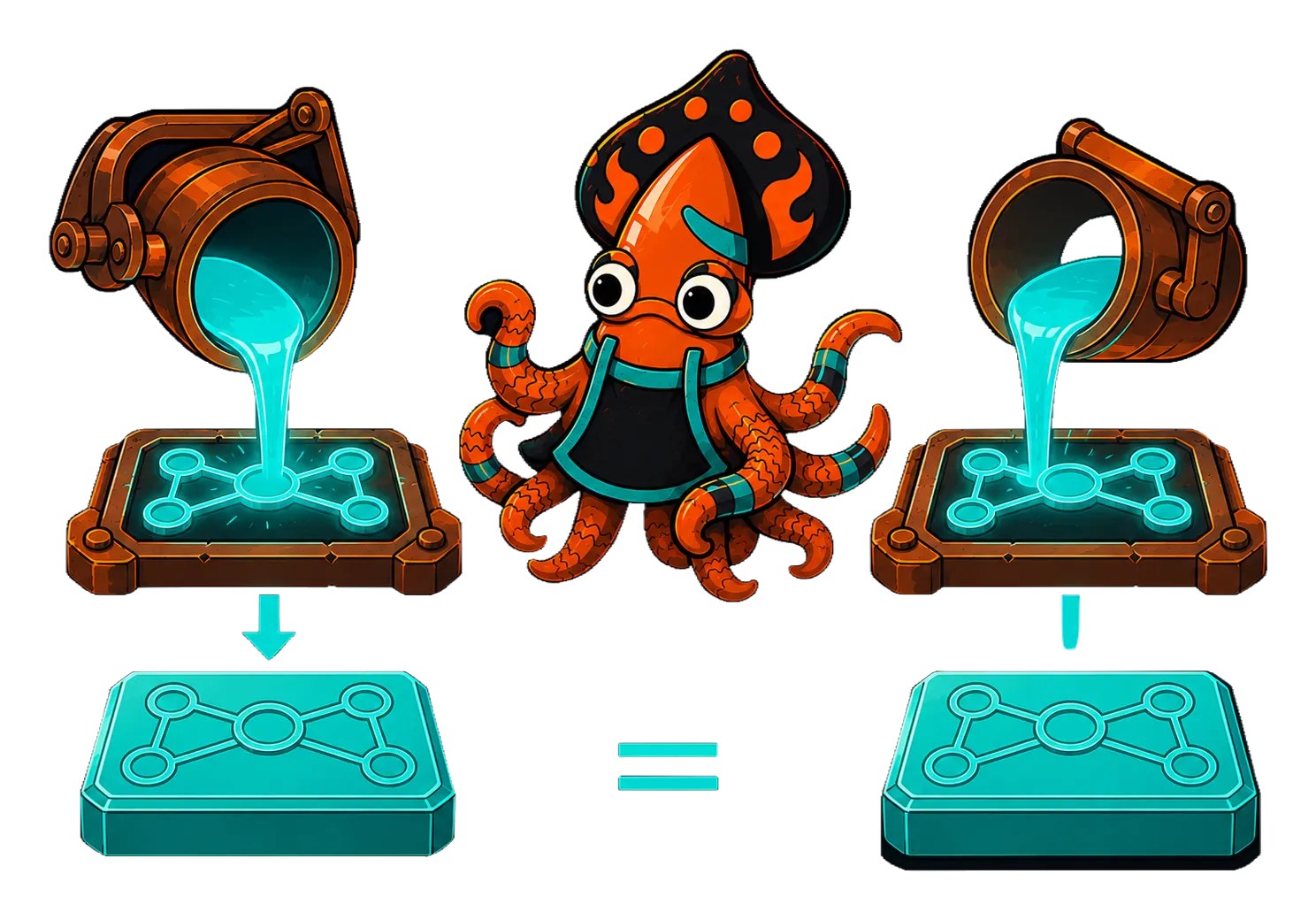
A long-lived workflow outlives the process running it. Crucible lets you snapshot a running instance to a clean, serializable value and restore it into a fresh machine: same configuration, same context, same pending work.
Snapshot() yields a typed Snapshot[S, E, C] carrying the active configuration, the bound context, history, and traces:
snap := inst.Snapshot()
// Persist it as JSON...raw, err := state.MarshalSnapshot(snap)if err != nil {    return fmt.Errorf("marshal snapshot: %w", err)}
// ...and later restore into a freshly forged machine.restored, err := machine.Restore(snap)if err != nil {    return fmt.Errorf("restore: %w", err)}
The snapshot is clean by construction because context is a value, not a shared pointer graph: capturing Snapshot() copies the entity C, so the snapshot can never alias live state or mutate later. Restore rejects a snapshot whose Machine name does not match the target, so you never resume against the wrong definition.
Inspection accessors read the live instance without firing anything:
inst.Current() // primary active leaf; "what state am I in?"inst.Configuration() // every active leaf (length N for N parallel regions)inst.Entity() // the bound context valueinst.History() // the ordered Fire tracesstateDiagram-v2
[*] --> Running
Running --> Snapshot: inst.Snapshot()
Snapshot --> Stored: MarshalSnapshot
Stored --> Running: machine.Restore
note right of Snapshot
value context →
no aliasing, clean copy
end note
A restored instance re-arms the configuration’s effects, including pending after timers and in-flight actors, so it resumes exactly where it was captured, as a recovering host would after a process restart.