
Actors
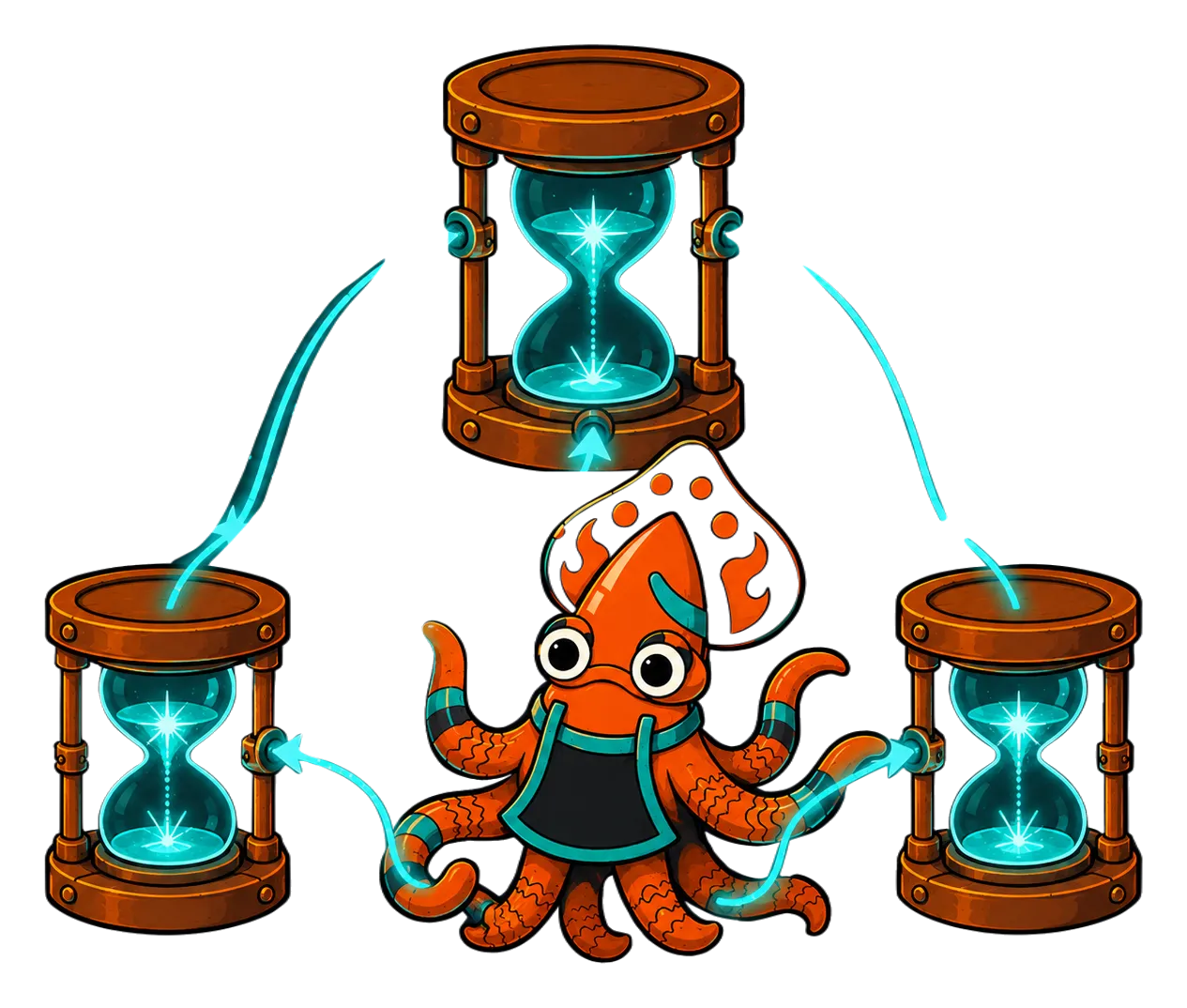
When a state needs to delegate work to a self-contained, concurrently-living unit, forge an actor: a child state machine the parent supervises through messages. Each actor has its own (S, E, C) types, runs independently, and reports back to the parent on completion.
An ActorSystem is the registry and supervisor. You bind a behavior (a factory that casts a fresh child instance) under a name, then a state invokes that name to spawn one.
sys := state.NewActorSystem(orderInstance).    Register("kitchen", kitchenBehavior()).    Register("courier", courierBehavior())
// An ActorBehavior casts a fresh child per spawn and exposes its output.func kitchenBehavior() state.ActorBehavior {    return func(map[string]any) (state.ActorInstance, error) {        inst := castKitchen()        return state.NewActor(inst, func(i *state.Instance[kitchenStage, kitchenSignal, kitchenTicket]) any {            return i.Entity().PlatedItem        }), nil    }}
A state declares an actor invocation with InvokeActor, naming the signals fired when the actor completes or fails:
b.SubState(Cooking).InvokeActor("kitchen", state.WithInvokeOnDone(PlatedUp), state.WithInvokeOnError(Declined))b.SubState(EnRoute).InvokeActor("courier", state.WithInvokeOnDone(DroppedOff), state.WithInvokeOnError(Declined))On entering Cooking, the kernel emits a spawn effect; the ActorSystem builds the actor and the host drives it. Address a running actor with its derived id and deliver events to it:
ref, _ := sys.Ref(state.ActorID("kitchen", Cooking, 0))sys.Deliver(ctx, ref, kitchenCook)When the child reaches its final state, the system fires the parent’s completion signal (PlatedUp), threading the actor’s output into the parent’s reducer.
stateDiagram-v2
    state Fulfillment {
        [*] --> Cooking
        Cooking --> AwaitingCourier: PlatedUp
        AwaitingCourier --> EnRoute: PickedUp
        EnRoute --> [*]: DroppedOff
    }
    Cooking --> Cooking: kitchen actor
    EnRoute --> EnRoute: courier actor
The kitchen and courier are real child machines. The parent never reaches inside them. It spawns, messages, and folds their output. That isolation is what keeps a large workflow composable.